Trump runs out of options
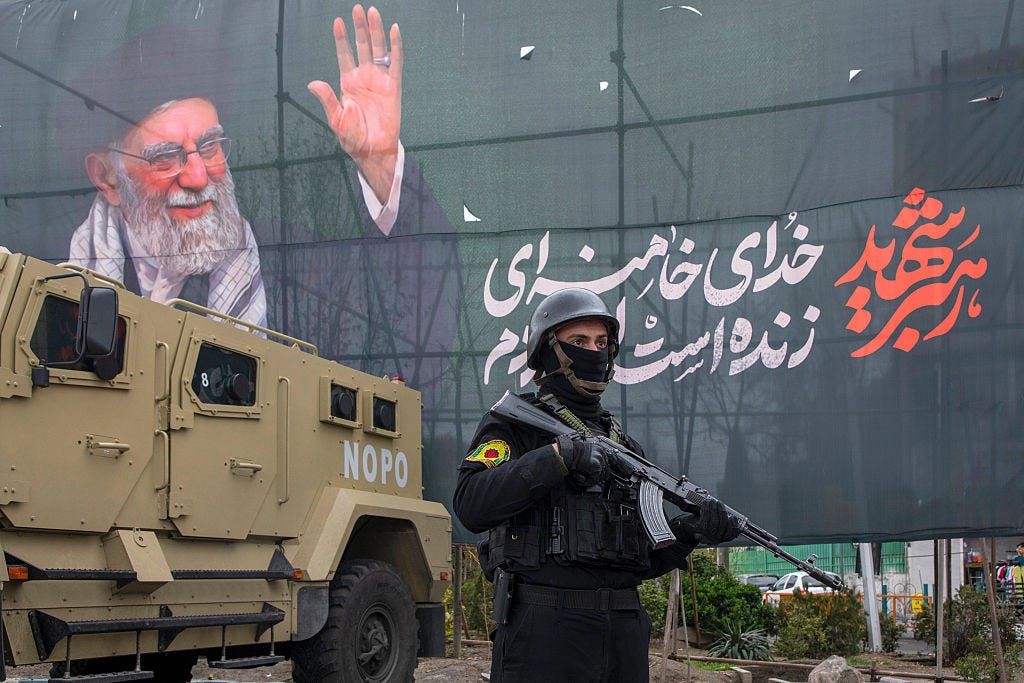
For the past week I have been in Washington. It’s cherry blossom time so the city is looking pretty although it’s a bit cold. I have been combining a bit of teaching with visits to think tanks and catching up with old friends. In the past I would have had access to figures in government. This might have helped me make sense of the administration’s policies on the two issues that interest me most - the Russo-Ukraine and Iranian Wars. There was however nobody to talk to and I’m not sure it would have helped if I had found someone. I was able to speak to lots of people, many of whom had responsibility for these issues in previous administrations. The first response to my questions was normally an eye-roll.
It is hard to convey the gloom that has overtaken Washington. All the structures that are vital to crisis management have either been attenuated or disbanded. There is hardly anyone left on the National Security Council staff. A friend described an empty State Department where you could hear your own foot steps. Marco Rubio is involved in the decision-making but he has neglected to acquire the professional staff assessments that should inform such decisions (see this from Dan Drezner).
The military part of the Pentagon still functions, but the civilian part has been purged. At its head is Pete Hegseth who puts effort into looking charismatic and brings the perspective of a disgruntled junior officer to everything he does, waging his own war on ‘woke’ which in its latest version involves striking out the names of two black men and two women for promotion to general. Some satisfaction is taken that figures such as Elbridge Colby, who were supposed to be providing the intellectual heft to security policy, are now stuck defending exactly the interventions they were pledged to avoid.
And then overseeing this President Trump appears to inhabit an alternative reality which he shares regularly on Truth Social or whenever a reporter gets a microphone close to his mouth, which is quite often. His utterances have become increasingly incoherent, with contradictory statements following quickly one after the other, and frankly delusional claims.
There seems to be a reasonably consistent structure to his statements: under Trump America is very strong; it is also independent and really does not need help from anyone; the president’s strategic judgement is masterful; because of this adversaries invariably bend to his will; if they fail to do so retribution will be unprecedented; any critics are either malign or misled. This is an all-purpose narrative. When there is limited evidence to back it up, as with Iran, he just makes stuff up. The Vice President, who knows this is a screw up, stays silent and bides his time, encouraging Trump to blame Europeans for a dire situation that is not of their making.
The failure to consult Congress prior to launching Epic Fury (I don’t need to repeat the obvious substitutions for ‘Fury’ one hears) means that the administration is increasingly isolated. The war has been unpopular from the start and it is getting more so. The inflationary effects of the war are already biting and if some vital supplies stay trapped in the Gulf the pain will soon get worse. Without a quick resolution of the war, many Republicans take for granted a hammering at the mid-terms.
Against this backdrop there are unsurprising reports that Trump is fed up with the war and wants to end it as quickly as possible. His normal ploy is to declare a stunning victory and move on. He has in fact been trying this since early March and still talks about the war being ahead of schedule, at least in terms of the US and Israel running out of things to bomb. But as much as he’d like to walk away this would mean leaving behind a mess in the Gulf. In the rest of this post I’ll look at the prospects for a negotiated settlement, further military escalation, and the possibility that the US will retreat without a resolution.